
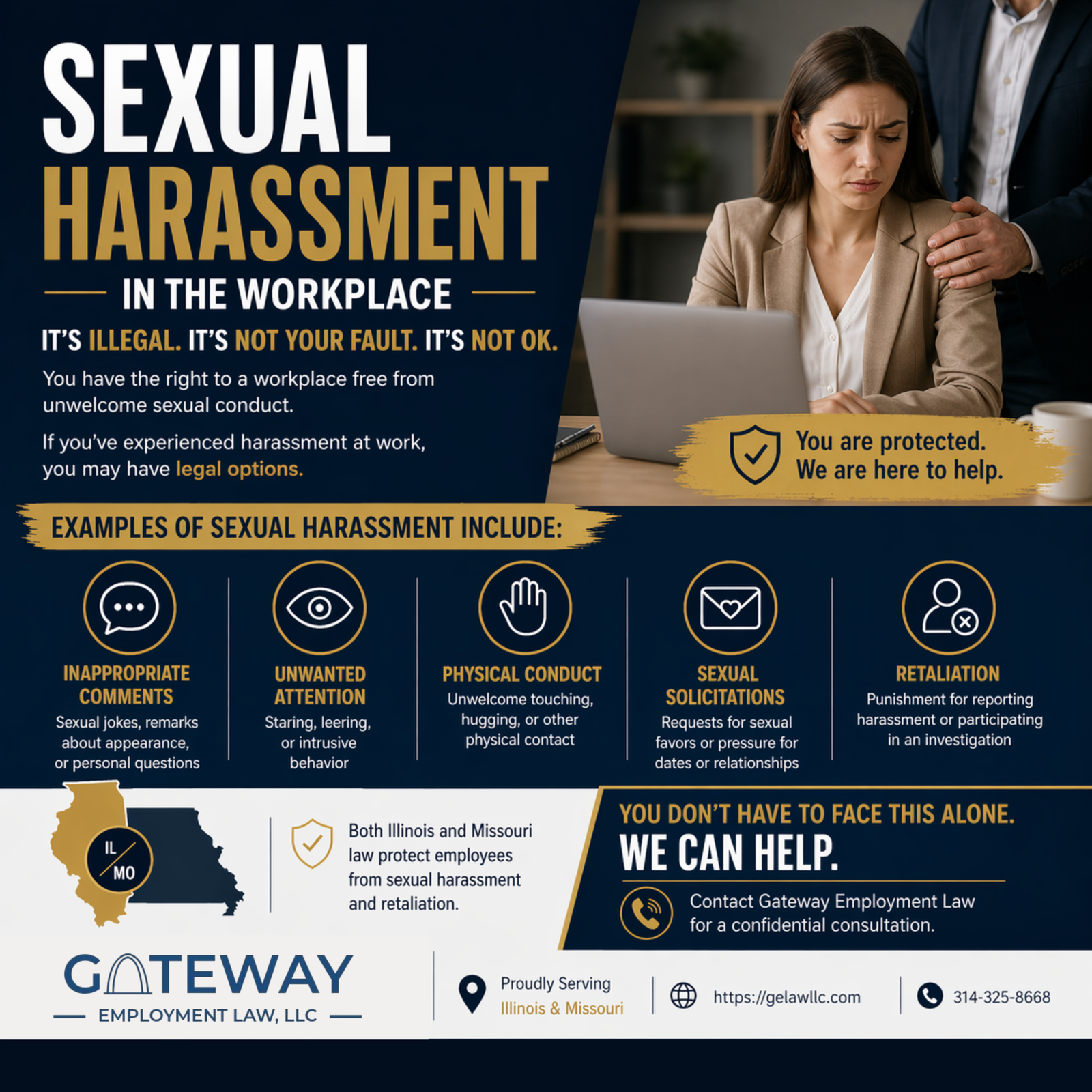
Sexual harassment in the workplace is not always obvious. That is exactly why it continues to impact employees across industries. Understanding how it shows up, what your rights are, and when to take action is critical. This article breaks down the fundamentals so you can recognize misconduct early and respond with confidence.
What Qualifies as Sexual Harassment?
Sexual harassment is a form of workplace discrimination prohibited under Title VII of the Civil Rights Act of 1964. It includes unwelcome sexual advances, requests for sexual favors, or other verbal or physical conduct of a sexual nature that affects your employment or creates a hostile work environment.
There are two primary categories
1. Quid Pro Quo Harassment
This occurs when employment decisions such as promotions, raises, or continued employment are tied to submission to sexual conduct.
Example: A manager implies you must go on a date to secure a promotion.
2. Hostile Work Environment
This involves ongoing behavior that creates an intimidating, offensive, or abusive workplace.
Example: Repeated inappropriate jokes, comments about appearance, or sharing explicit content.
Common Signs of Workplace Sexual Harassment
Sexual harassment often escalates over time. Early recognition is key. Watch for
– Unwanted touching, hugging, or physical contac
– Sexual jokes, comments, or innuendo
– Repeated requests for dates after rejectio
– Displaying or sharing explicit images or message
– Comments about your body, clothing, or personal lif
– Retaliation after rejecting advances or reporting behavior
If the behavior is unwelcome and persistent, it may meet the legal threshold.
Your Rights as an Employee
Employees are protected under federal and state laws, including enforcement by the Equal Employment Opportunity Commission. In states like Illinois and Missouri, additional protections may apply at the state level.
You have the right to
– Work in an environment free from harassmen
– Report misconduct without fear of retaliatio
– Have your complaint taken seriously and investigate
– Pursue legal action if your employer fails to act
What to Do If You Experience Sexual Harassment
Taking action can feel overwhelming, but a structured approach strengthens your position.
1. Document everything
Keep records of incidents, including dates, times, witnesses, and any communication such as texts or emails
2. Review company policy
Most employers have internal procedures for reporting harassment. Follow them when possible
3. Report the behavior
Notify HR, a supervisor, or a designated compliance officer. Written reports are best
4. Avoid retaliation traps
If you experience negative consequences after reporting, document those as well. Retaliation is also illegal
5. Seek legal guidance
If your employer ignores the issue or mishandles your complaint, legal intervention may be necessary
Why Early Action Matters
Delaying action can weaken your claim and allow the behavior to continue unchecked. Early reporting creates a documented pattern that strengthens your case if escalation is required.
Sexual harassment is not just inappropriate. It is unlawful when it interferes with your ability to do your job or creates a hostile work environment.
Bottom Line
If you are experiencing sexual harassment at work, you do not have to navigate it alone. The legal framework exists to protect you, but timing, documentation, and strategy are critical.
Contact Gateway Employment Law today for a confidential consultation and take the first step toward protecting your rights and holding your employer accountable.